Showing posts with label Song Sparrow. Show all posts

Saturday, December 1, 2012

Sparrows Continued

The spot where I've been photographing sparrows continues to be productive with different species.  Amazing how a small patch of weeds can bring in so many different birds.


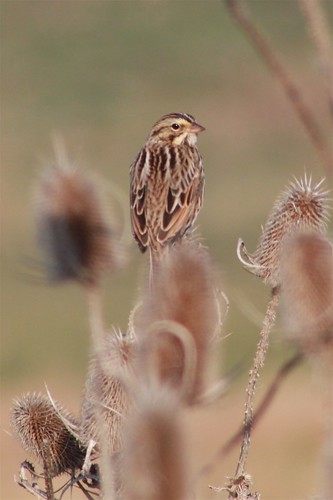
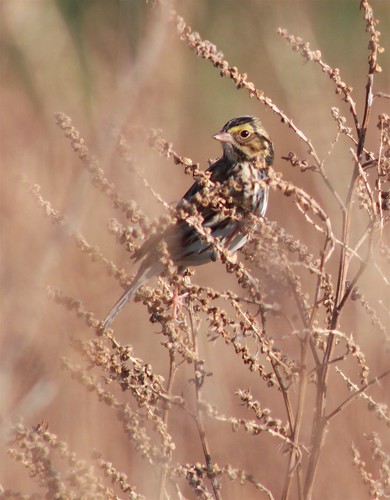
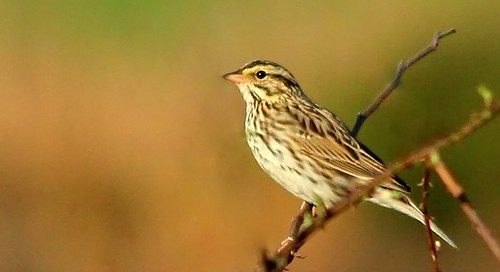
Savannah Sparrow
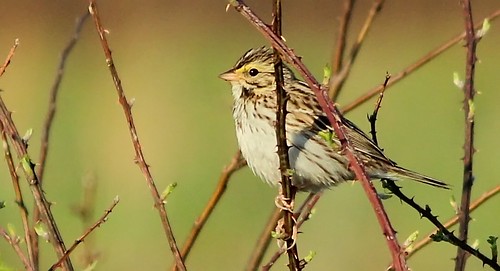
Savannah Sparrow

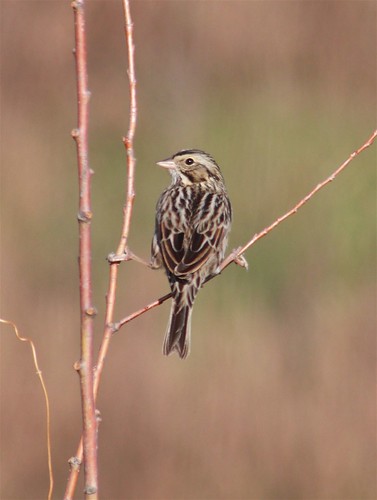
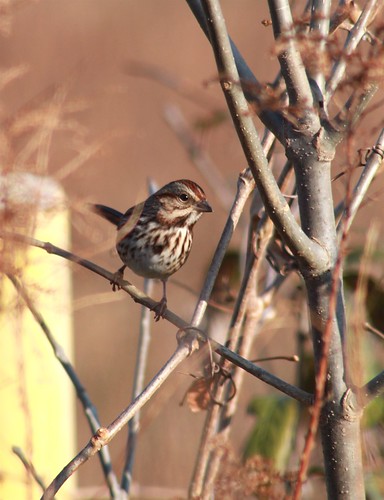
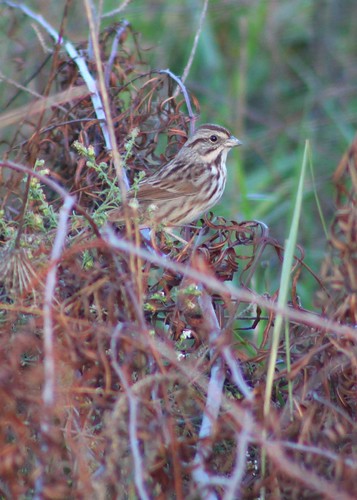
Song Sparrow
Song Sparrow


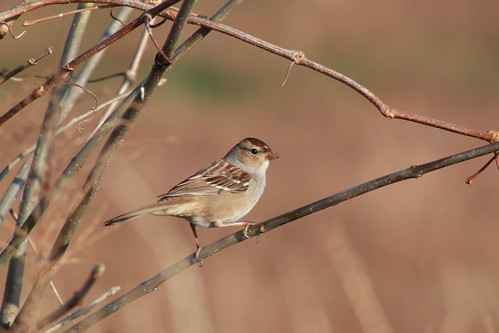
White-crowned Sparrow
White-crowned Sparrow (juvenile)

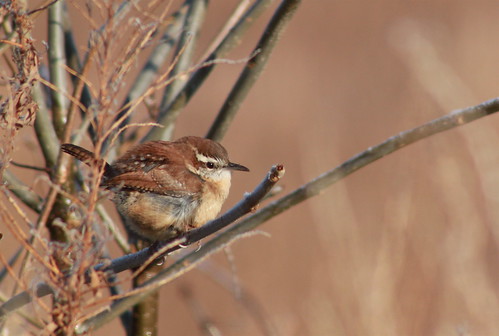
Although not a sparrow, this Carolina Wren was mixed in and posed for me while I photographing the sparrows. 

Carolina Wren

Friday, November 9, 2012

Sparrow Day

All the dried weeds and grasses have dropped their seeds and the sparrows are loving it. 

Savannah Sparrow

Savannah Sparrow

Savannah Sparrow
  Savannah Sparrow

Song Sparrow
Song Sparrow  


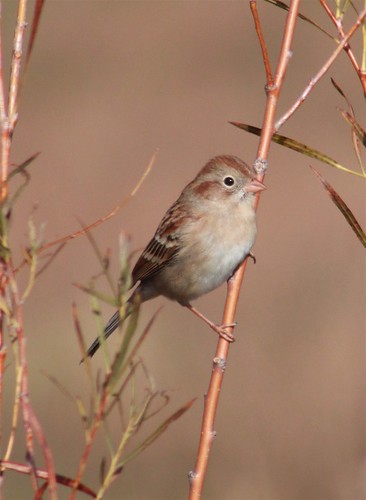
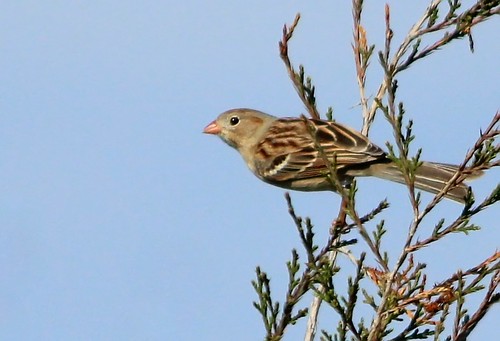
Field Sparrow
 Field Sparrow

Sunday, May 13, 2012

"Blue" Bird

Birds as we all know come in a great variety of colors, which is probably why we are so fascinated by them.  From the browns and grays of sparrows, to the bright yellows and reds of goldfinches and cardinals, to the stunning blue hues of buntings and grosbeaks.  While there are a great many birds that exhibit brown plumage, fewer exhibit yellows and reds, and fewer still exhibit blue feathers.  What makes blue plumage so different that it only occurs in a handful of birds?  Before we get in to what makes them so special we have to understand a little bit more about how other birds derive their color.

Many bird feathers achieve their brown coloration from a pigment known as melanin.  Melanin determines the coloration of one's skin or feathers.  The more melanin present the darker the pigment will be.  In fact albinism is just the absence of melanin.  But what does is mean to birds?  In birds melanin can be more than just for coloration.  It is theorized that melanin can be used by male birds to exert dominance over other males.  The dark coloration of feathers is used as a signal that conveys fitness and superiority over other males, reducing the need for fighting among male species in some birds.  Melanin also provides extra strength for bird feathers.  Feathers that contain melanin are stronger and more resistant to wear and tear.  In fact, many white birds have black on their wingtips to reduce the wear on the most important flight feathers.

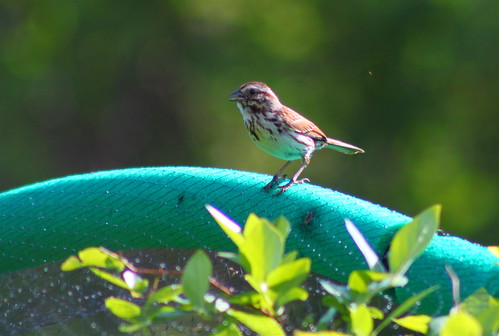
Song Sparrow
Song Sparrow

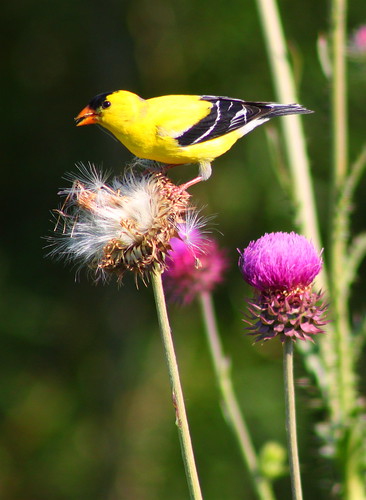
Another form of pigmentation in birds is derived from carotenoids.  Caretonoids are responsible for the yellow and red colors seen in a variety of birds.  Carotenoids are derived from the plants in the bird's diet and are used as a way for female birds to gauge fitness in males.  Females will choose the males that have the brightest coloration because of what it says about the male's genetics and fitness.  Bright male birds are better at foraging, therefore giving them brighter plumage, and making them genetically superior to less colorful males.     

American Goldfinch

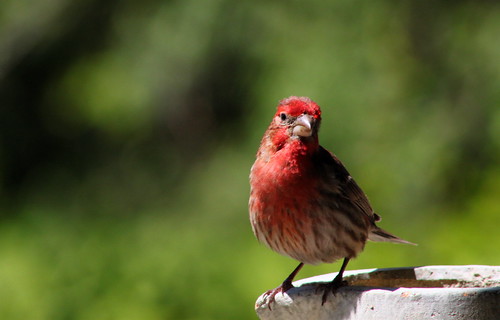
House Finch

Which brings us to "blue" birds.  Blue feathers are unlike feathers derived from melanin or carotenoids.  Instead of being produced through biophysical methods like melanin or achieved through diet like carotenoids, blue feathers are what is known as structural colors.  Structural colors are produced by the arrangement of the barbules in the feathers to reflect light of a certain wavelength, in this case blue.  So blue feathers are not made by any pigment, rather they are arranged in such a way to trick our eyes into seeing blue.  If you shine a light on a blue feather from behind, what you will see won't be a blue feather, rather it will be brown.  This is because the light source is not hitting it from above and scattering the light to reflect blue color to your eyes.


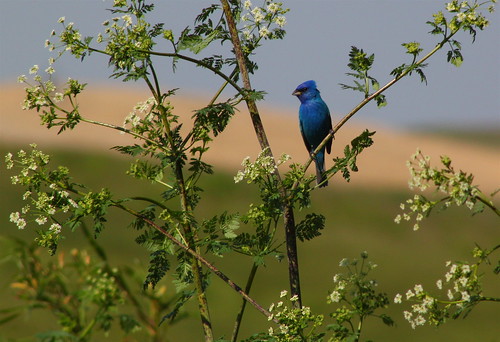
Indigo Bunting

Structural color is also seen in the gorget of hummingbird species. The gorget is the bright iridescent throat patch that give many hummingbirds their names, like the Ruby-throated Hummingbird.  These birds use structural colors in much the same way, but are different in one respect.  The "blue" birds have structural feathers that include tiny nanoscopic air pockets that interrupt the light and gives the bird an even blue color.  The gorgets of hummingbirds do not contain such air pockets and that is why their feathers give off a bright iridescent shine.  The gorget feathers are much more closely aligned giving the feathers an almost metallic look.

Rufous Hummingbird (photo courtesy of Wikipedia)

Thursday, March 22, 2012

Cedar Grove Commercial Park

I went on a Beckham Bird Club field trip this week to Cedar Grove Commercial Park in Shepherdsville, KY. It was led by our own Ryan Ankeny!

It was a good trip, and we saw several different species of birds. Although, Ryan said that when he usually leads this field trip during the month of march, it is much cooler and they usually see more of the wintering birds. I suppose a lot of them may have left a little early to head back north.

I got to see my very first Savannah Sparrows!

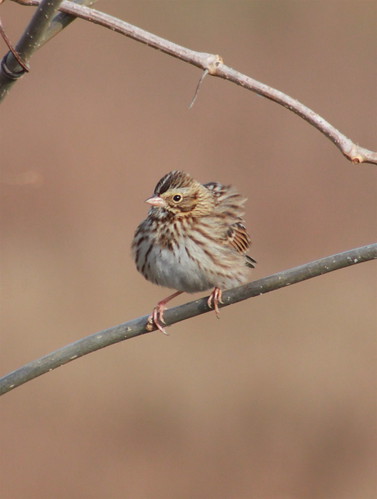
Savannah Sparrow
Savannah Sparrow

Savannah Sparrow
Savannah Sparrow

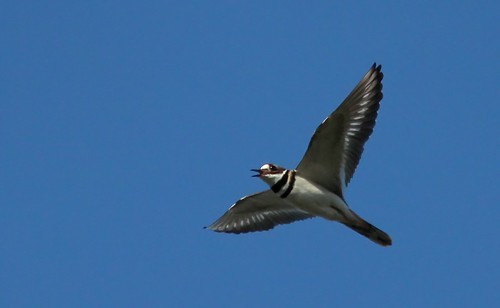
There were lots of Killdeer running around. I just happened to catch this one in flight.

Killdeer
Killdeer

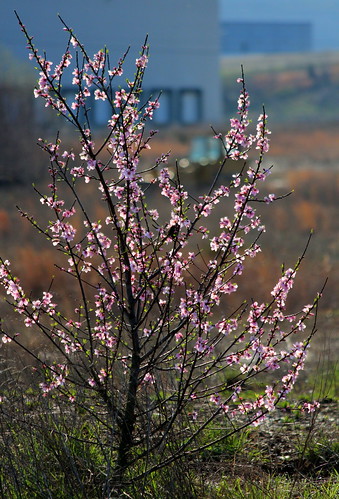
A lot of trees are in bloom! I don't know what type this one is, but I thought it was so pretty!

Purple flowered tree


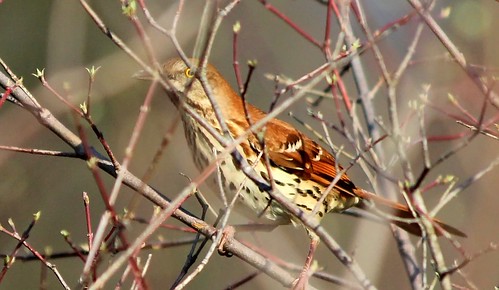
This Brown Thrasher is the first one I have seen this season. He just popped in long enough for me to capture a sketchy picture, but I had to include it! I love their eyes!

Brown Thrasher trying to hide
Brown Thrasher

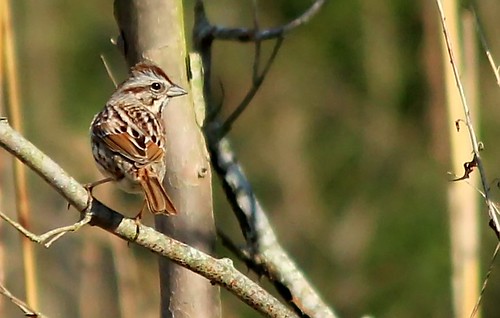
Song Sparrows aplenty, they are always fun to see and hear!

Song Sparrow
Song Sparrow

This next photo of a Field Sparrow is my favorite! I think they are so cute with their little pink beaks!

Field Sparrow
Field Sparrow

These were the only birds I got decent pictures of, but we also saw, Pileated Woodpecker, Eastern Phoebe, Eastern Bluebirds and White-Crowned Sparrows, just to name a few. All in all a good birding trip!

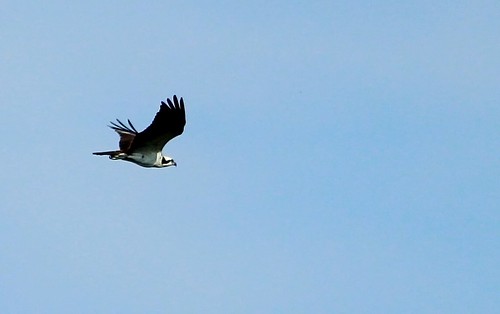
I also wanted to mention that our (Louisville's) male Osprey arrived to the nest on Shippingport Island around last Saturday. It seemed like he took a few days to recuperate from his long trip from South America, but I stopped by this morning and saw him carrying a few sticks to the nest. The female Osprey should be arriving any time. Last year she arrived approximately two weeks after the male.

Osprey
Osprey

I would also like to give you an update on the Lake Barkley Osprey Cam sponsered by KEEP. Since my blog entry last week, the male Osprey arrived and they have been busy tidying up the nest, and were even observed mating. Once they lay an egg, the cam will be real time video, with sound! I'm really looking forward to watching them throughout the season. It will give me a glimpse of what may be happpening in our Osprey nest!

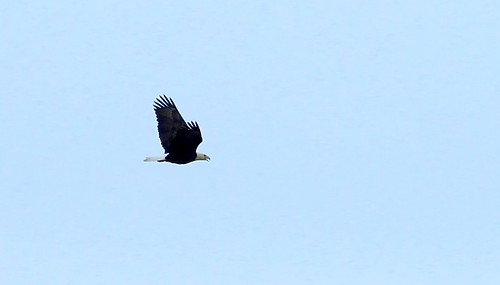
Last but not least, I want to update everyone on the Bald Eagle nest on Shippingport Island. Several times that I have been there to check on them, I have observed the mate nearby, and watched them exchange places at the nest. This is very good news, since the last two years, their attempts at nesting were unsuccessful, mainly because Papa Eagle wasn't around enough, and Mama Eagle had to leave the nest to search for food! I have heard that sometimes it takes years for Eagles to "get the hang" of nesting. Everyone keep your fingers crossed, but we just might get to have a family this year! I'll keep you updated!

Bald Eagle
Bald Eagle

Sunday, October 30, 2011

Louisville Birds

The weather is starting to change and I've been seeing a few different types of birds around Louisville, but I've only been able to get pictures of the most common birds!  Oh well.  In the last week I've seen several species of sparrows, such as: White-throated, White-crowned, Swamp, Vesper, Lincoln's, and Chipping, along with several Dark-eyed Juncos.  Also saw a Northern Harrier for the first time this season.  So lots of movement lately, especially with the sparrows.  Here are a few of the most common birds in Kentucky I've seen this past week.

Song Sparrow
Song Sparrow

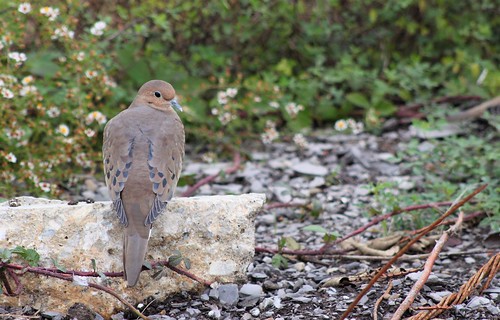
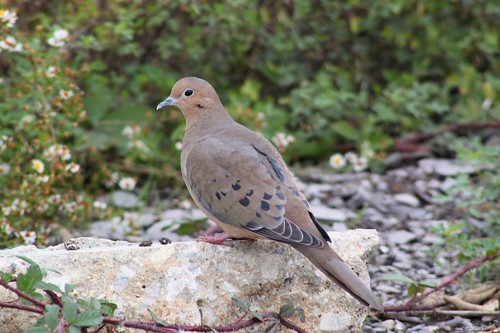
Mourning Dove

Mourning Dove
Mourning Dove

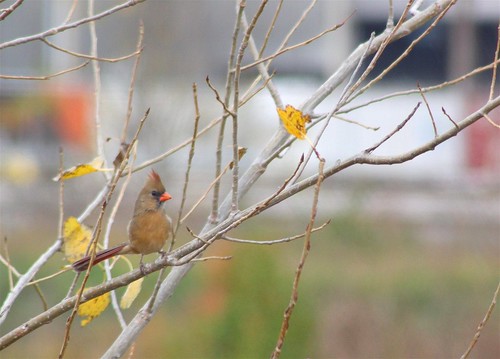
Northern Cardinal
Northern Cardinal

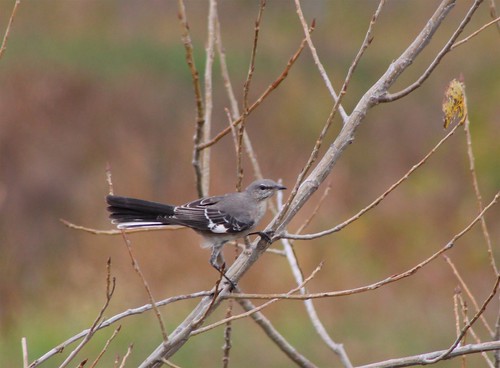
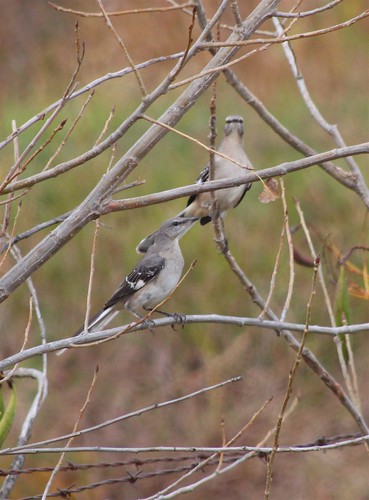
It is getting that time of year when the berries are becoming ripe on the exotic honeysuckle.  I've read where the berries offer very little nutrition for the birds but they sure seem to devour it and defend their honeysuckle patches with determination.  The two Northern Mockingbirds below were fighting over a small patch of honeysuckle berries.

Northern Mockingbird

A Northern Mockingbird on his territory...

Northern Mockingbird

...a rival is eying his honeysuckle patch...

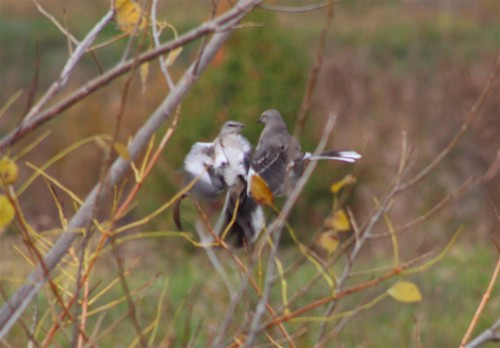
Northern Mockingbird

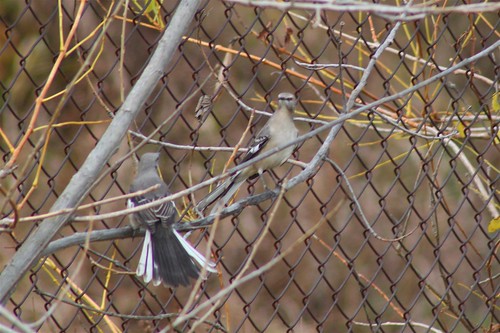
...they take turns signaling to each other by flashing their tails...

Northern Mockingbird

...and when that doesn't resolve the problem they take to the air and battle it out.  These two birds were fighting for some time before the challenger decided it wasn't worth it and flew off. 

Sunday, May 29, 2011

Bird a Day: Song Sparrow

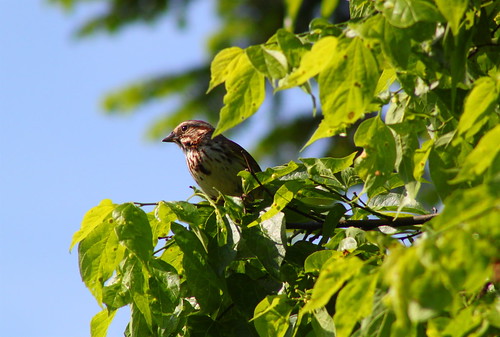
I'm getting low on bird pictures so today I present you with the commonest of the common birds, the Song Sparrow.  These little sparrows are here year round and they are everywhere.  Go in your backyard and there will be one singing from the bushes.  Take a walk in the park and you're bound to hear several.  Going on a arctic vacation this summer?  You'll hear them there too.  In fact it is tough to find a place you won't hear Song Sparrows, here is a list of just some of the habitats they can be found in: tidal marshes,desert scrub, pinyon pine forests, aspen parklands, prairie shelterbelts, Pacific rain forest, chaparral, agricultural fields, overgrown pastures, freshwater marsh and lake edges, forest edges, and suburbs.  Quite an extensive list for sure!  But just because they are common doesn't mean they are uninteresting.  Did you know that a single male can have 20 different songs he will sing along with over 1000 improvised variations?  Young males learn the songs of other males nearby and quietly sing to themselves to get their tune just right before they perform for females in the spring.

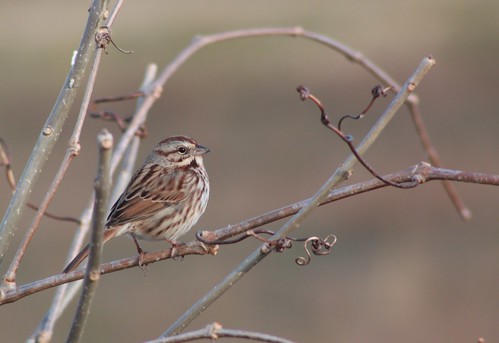
Song Sparrow

Song Sparrow

Song Sparrows have highly variable plumage across their range.  The eastern form which is in our area has a gray face, gray back with brown streaking, and a streaky back.  They are one of a handful of sparrow species with a dark central chest spot.  They also have a dark "mustache" on the side of the face that can be used to differentiate them from other sparrows.

Tuesday, February 8, 2011

Video Testing

I was testing out the video function on my new camera on Sunday. I'm still learning and the weather wasn't cooperating but I think I got a couple decent videos. Check em out.


Song Sparrow from Ryan Ankeny on Vimeo.


Northern Cardinal from Ryan Ankeny on Vimeo.

Also, don't forget that the Great Backyard Bird Count is coming up.  It takes place between Feb. 18-21 and anyone can participate.  Check out the website for more info.

Sunday, January 16, 2011

Hayes Kennedy Park and Garvin Brown Preserve

Hayes Kennedy Park is located on Bass Road, off of River Road, and is operated by metro parks.  Directly adjacent to Hayes Kennedy is Garvin Brown Preserve which is operated by the conservation group River Fields.  Check out the map below to see where the parks are in relation to you.


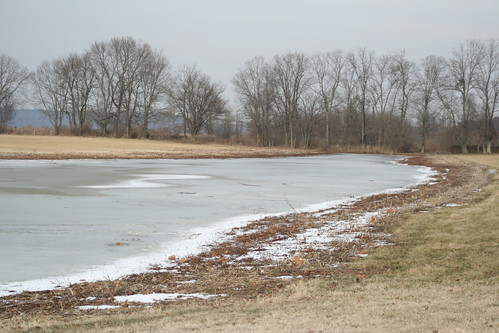
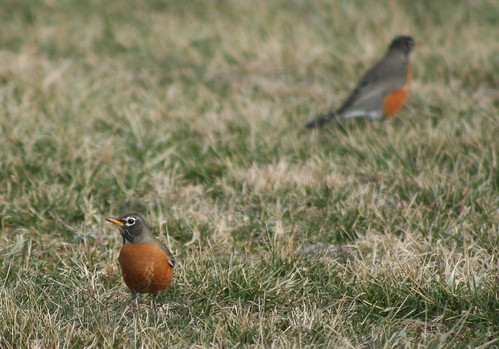
It was another cold and windy day yesterday when we arrived at Hayes Kennedy Park.  Being so close to the river made the wind even stronger.  There is a little pond, more of a wet depression really, that runs from the parking lot to the end of the park.  Usually this little spot is filled with all kinds of ducks but yesterday, in mid January, it was frozen.  On the opposite side of the pond the songs of Eastern Meadowlarks can often be heard, but it was too cold and too early in the year to hear them.  Blue Jays and Carolina Wrens were calling in the background, and several American Robins were picking at worms on the soccer field.  With the pond being frozen and no ducks in sight, we decided to walk the well worn path to Garvin Brown Preserve to see what we could find.

Pond

American Robins
American Robins

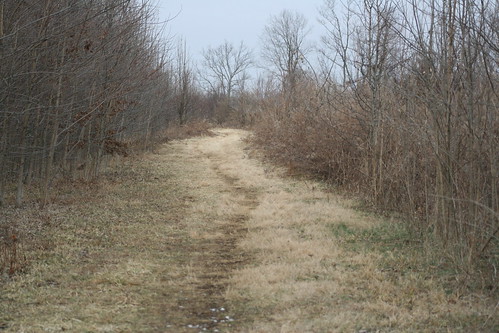
Garvin Brown is a special kind of place.  It isn't big, only 46 acres, but it has a certain charm.  The preserve consists of several fields which are intersecting by paths that run along the edges and cut through the middle.  It is often very wet and muddy here, but yesterday the ground was frozen and so was the mud.  The preserve is special because it is an oasis of nature along a river crowded by development on both banks.  This was the type of habitat that was here before settlers, when the river would occasionally overrun its banks and create this type of early succession fields composed of weeds and grasses.
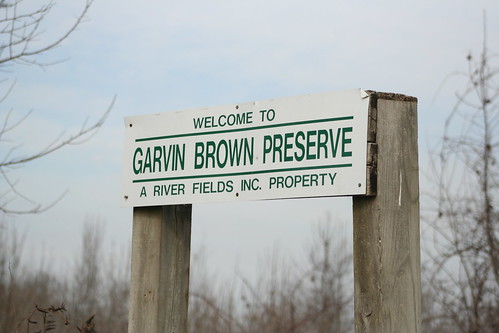
Garvin Brown Sign

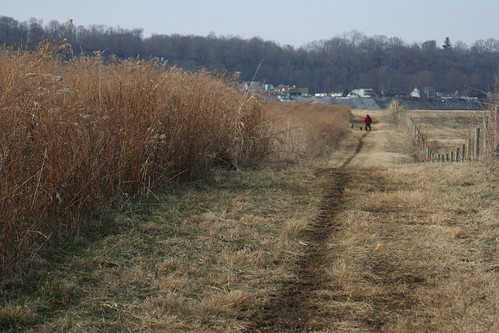
Mown Path

Path

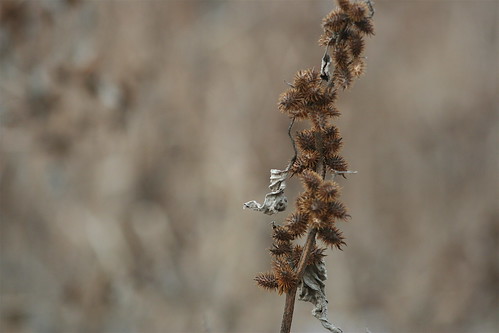
Today, with the river tightly confined to its banks, mowing is used to keep the fields from growing into forests, and the fields are mowed in a rotational fashion.  Rotational mowing is a tool used by wildlife managers to provide several types of habitat in one place.  One field is mowed at a time while the others are left to grow wild.  Each year a field is left un-mowed the more it changes, new weed and wildflower species grow, and with fields of several different ages a more diverse collection of plants are present.  Wildlife enjoy having diverse habitats in close proximity because it allows them to exploit different resources without having to go very far.  One recently mowed field may have certain grass seeds birds like to eat, while another older field may have plants that provide nesting material.  The goal of rotational mowing is to create as much diversity as possible and to keep the area from becoming a monoculture.  Below are some of the plants we found yesterday growing in different fields.
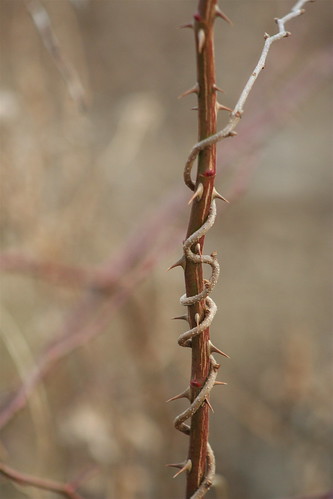
Intertwined

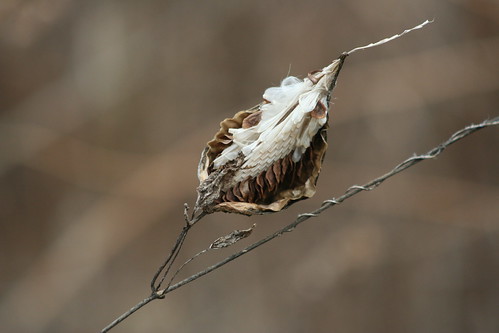
Milkweed Pod
Milkweed Pod

Cocklebur
Cocklebur

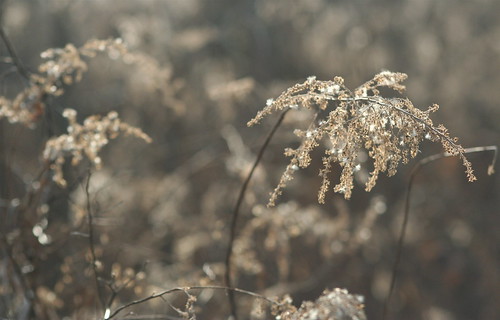
Goldenrod
Goldenrod

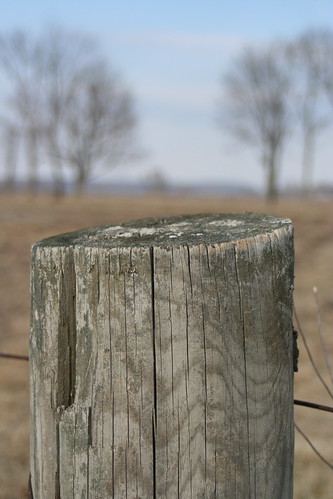
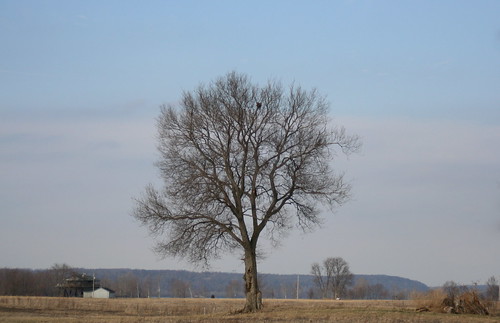
An old fence marks the boundary of the preserve.  Mega mansions stand on the banks of the Ohio River to the north, but the area directly adjacent to the preserve is an old farm field with a few trees growing tall in the middle of it.

Fence Post

Alone in a Field

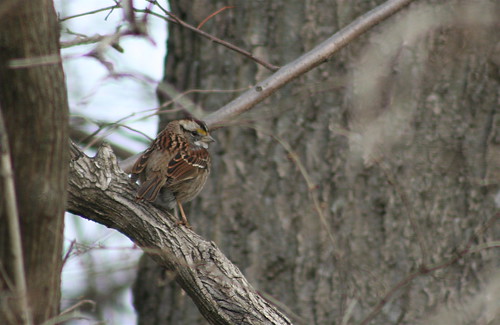
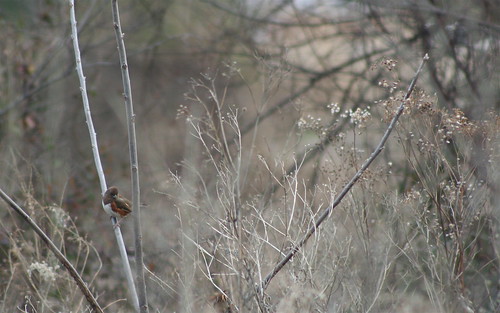
Garvin Brown is visited often by birders because it is a great place to find sparrows and warblers.  Yesterday was no exception, though they were camera shy.  We saw several species of birds belonging to the Emberizidae family (the sparrows) including: Song Sparrow, American Tree Sparrow, White-throated Sparrow, Eastern Towhee, and a Lincoln's Sparrow that responded to my pishing by bursting into song!  It was so clear and beautiful and unexpected.  Call me crazy but I swear I heard the song of a Common Yellowthroat as well.  Wich-i-ty, wich-i-ty, wich-i-ty!  Alas, I never found the bird making the song, and I'm not brave enough to proclaim hearing a Common Yellowthroat in January without at least getting a picture of it!  Below are some of the birds we did see.
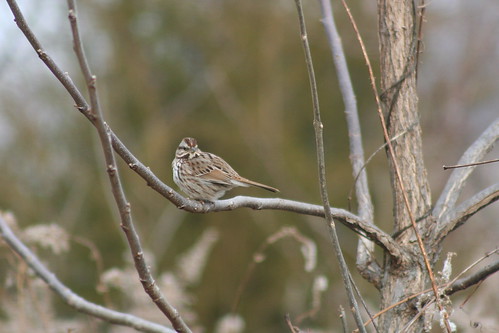
Song Sparrow
Song Sparrow

White-throated Sparrow

Eastern Towhee
Eastern Towhee (female)

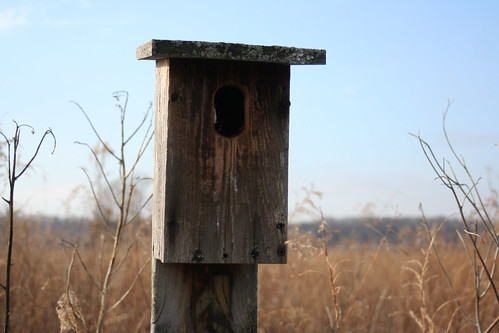
I will definitely be making a trip back in late March.  That is when Garvin Brown comes alive.  The flowers and trees will be blooming and the birds will be singing.  Red-winged Blackbirds show up in force in March, singing for mates and defending territories, but perhaps the most interesting birds in March are the Tree Swallows.  There are several Tree Swallow boxes at the preserve that provide nesting sites for these birds.  Tree Swallows are very entertaining to watch because of their aerial antics.  They swoop and dive and fight in mid air, all for the chance to court a female and raise a brood of birds in an old wooden box.  Make it a point to come to Garvin Brown in late March, you will not be disappointed.

Tree Swallow House

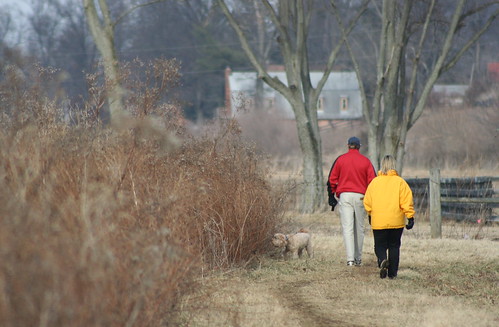
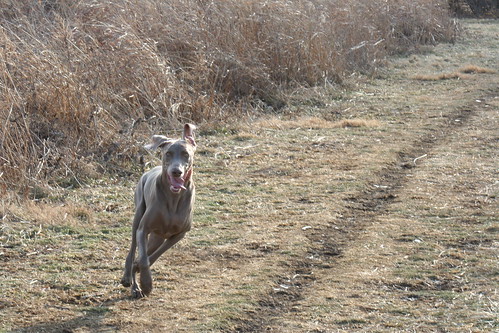
Garvin Brown is popular with dog walkers and you are sure to make some friends while you are there.

Dog Walkers

Mutt

Weimeraner

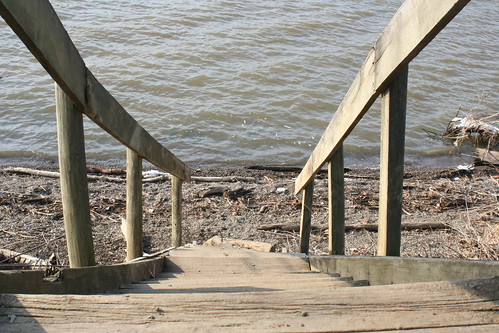
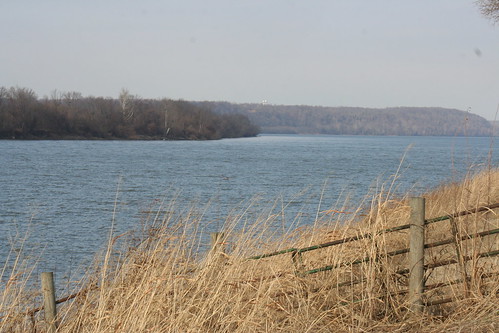
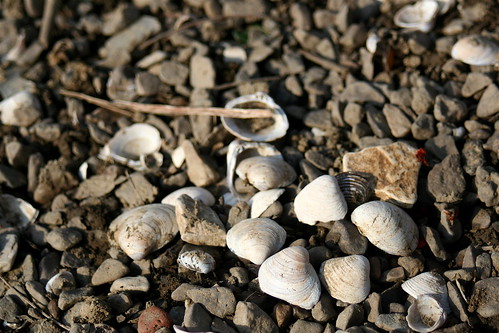
Before you leave be sure to check out the stairs that lead down to the banks of the Ohio.  The shoreline was clean and there were shells and driftwood everywhere.  It is a great place to relax and think in solitude, with the sound of the river lapping against the rocks, grass blowing in the breeze, and maybe even a barge or two slowly moving down the river.  It makes you wish more of the shoreline of the Ohio River was dedicated to nature.

Welcome

Ohio River

Sycamore

Shells

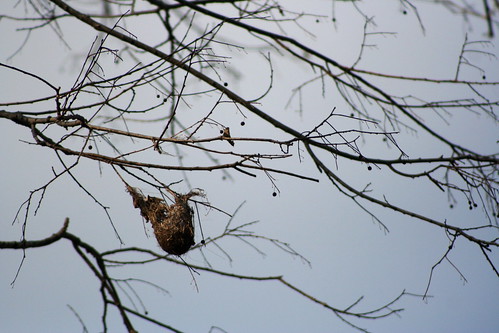
On the way out we spotted an oriole nest high in a tree.  Orioles weave cup-like nests on the ends of branches, making it harder for predators to reach.  Just think, only a few more months before the orioles will be back and at it again.  I'm really looking forward to spring.

Oriole Nest

A Post to My World. For other sites go to: http://showyourworld.blogspot.com/
Related Posts Plugin for WordPress, Blogger...

ShareThis


Design by Free WordPress Themes | Bloggerized by Lasantha - Premium Blogger Themes | Walgreens Printable Coupons