Showing posts with label Golden-crowned Kinglet. Show all posts

Wednesday, January 23, 2013

Winter Backyard Birding

Today turned out to be a huge day in my backyard! With the falling temperatures in the Louisville area, the birds had to find food and water! I decided to buy a birdbath heater this year, and I'm glad I did. It has performed very well thus far. This morning it was nine degrees, and although a great deal of it did freeze, there was a small area around the heating element that was open water. The birds really responded! I think they appreciated some fresh, non frozen water to drink!
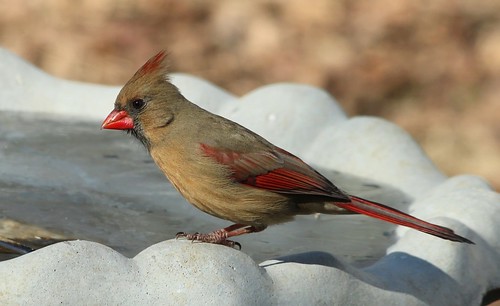
Northern Cardinal by Karen Bonsell
Northern Cardinal (female)

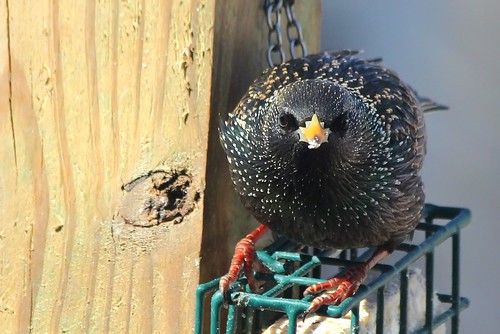
What are you lookin at? (European Starling)
European Starling

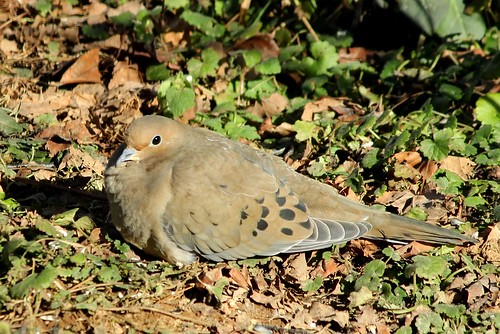
Mourning Dove
Mourning Dove

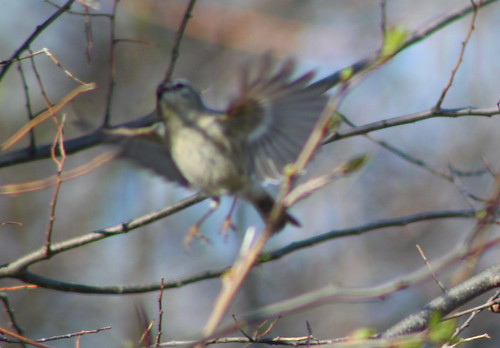
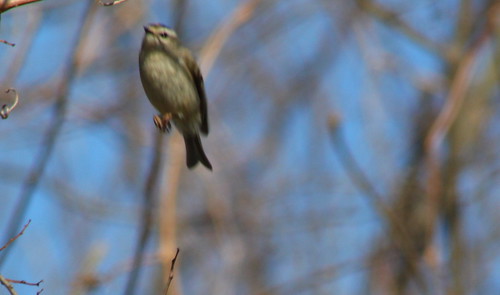
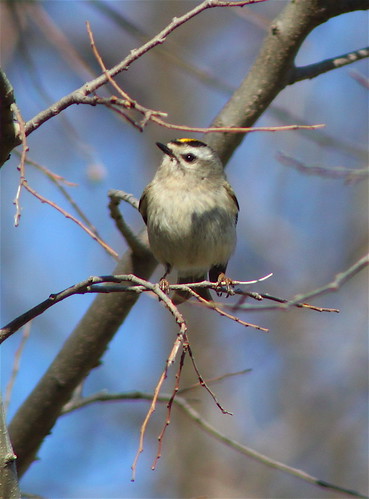
I happened to notice a very small bird very high in my Maple tree. When I got a closer look, I could see it was a Golden-crowned Kinglet! This photo is somewhat blurry, but it gives you an idea of what he looks like. He also moves around very fast and erratically. I believe he was coming to the Maple tree to drink sap that was seeping out of the branches. He would come to the Maple for a few minutes then fly off to a pine tree in the neighbors yard! He did this several times throughout the day! 
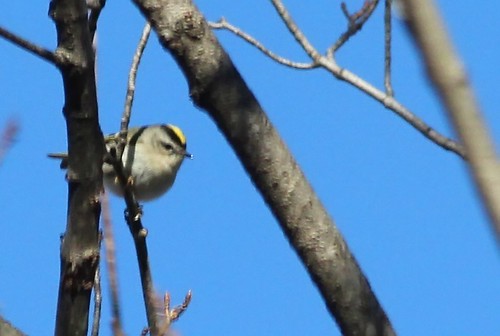
Golden-crowned Kinglet by Karen Bonsell
Golden-crowned Kinglet
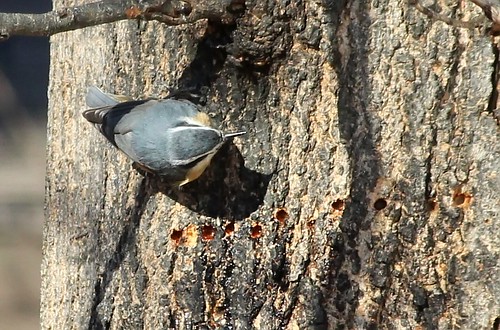
Another highlight from the day was the Red-breasted Nuthatch! These guys don't usually come this far south, but with the finch irruption this winter, the Red-breasted Nuthatch, though not a finch, is also a species on the move. I started seeing him in late fall and haven't seen him very often since, but it is my guess that he needed to find another food source with the cold temperatures. 
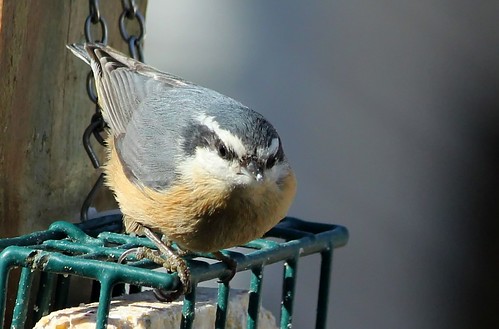
Red-breasted Nuthatch by Karen Bonsell
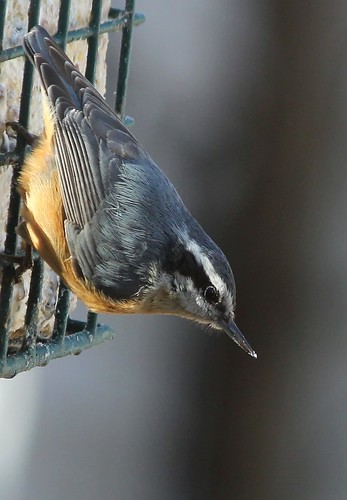
Red-breasted Nuthatch

Red-breasted Nuthatch by Karen Bonsell
Red-breasted Nuthatch
A female Yellow-bellied Sapsucker spent most of the day in the Maple tree drilling sap wells. When another woodpecker would come near, she would chase him off. She didn't seem to mind other birds though. There were many birds and squirrels drinking from these sap wells, including the Red-breasted Nuthatch in the photo below the Sapsucker photo. 
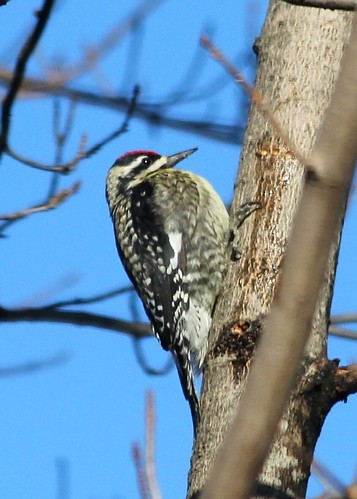
Yellow-Bellied Sapsucker by Karen Bonsell
Yellow-bellied Sapsucker

Red-breasted Nuthatch by Karen Bonsell
Red-breasted Nuthatch drinking from sap wells

I have been having a Pine Warbler visiting my feeders since early December. I didn't know what it was for a long time, but I showed the pictures to some of the members of Beckham Bird Club and they felt it was a Pine Warbler. This is a rare bird to be in this area at this time of year. Most Warblers migrate to Central or South America! I am noticing that I usually only see him when it's very cold or very rainy. This makes sense to me, as Warblers tend to mainly eat insects. He seems to like the suet and the black oil sunflower seed!
If you would like to see some of my other pictures of the Pine Warbler, click here. 
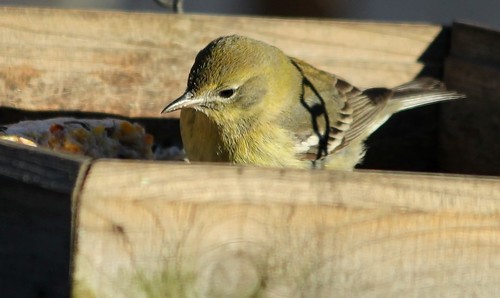
Pine Warbler by Karen Bonsell
Pine Warbler

I ended up seeing 23 different species in my yard today!

Tuesday, April 5, 2011

Golden-crowned Kinglet

Introducing one of the hardest birds to photograph.  If you have managed to get a clear picture of this bird I tip my hat to you.  I'm talking about lively antics of the Golden-crowned Kinglet.  These guys are the ADD kindergartners of the bird world.  They pop like popcorn form branch to branch, hanging upside down, flapping furiously in one spot, and hanging in mid-air as they search for insects.

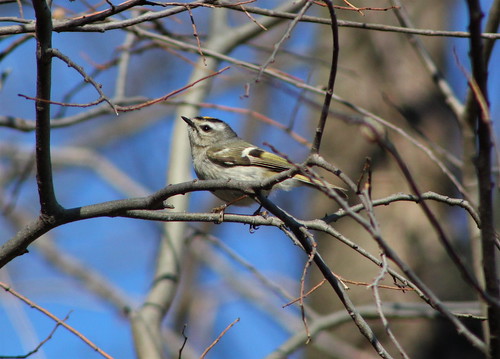
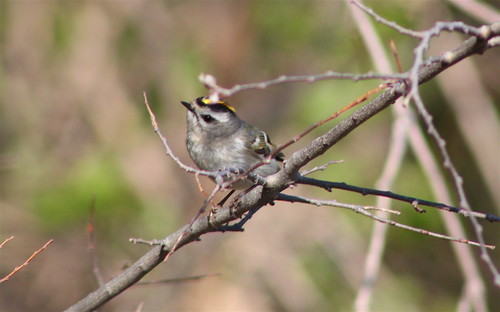
I found a nice group of these guys today and spent around 20 minutes photographing them.  They afforded me great views, but I am a little disappointed in the photos I got out of it.  Most were blurry because the bird was in motion, flying to a different branch.  Several shots were of nothing but a branch, the bird having flown before the shutter could close.  I shot over 130 photos and only managed a handful of keepers.  Below are what a majority of them looked like.

Golden-crowned Kinglet

Golden-crowned Kinglet

Golden-crowned Kinglet

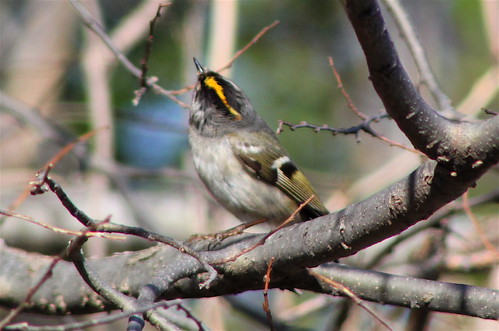
It should be no surprise why they are called Golden-crowned Kinglets, just look at the photo below.  Their scientific name is Regulus satrapa meaning "king with a golden crown".  Other than the golden crown, there are some other characteristics that set it apart.  They have a dark stripe through the eye, and a white supercilium (eyebrow).  They have white wing bars, a dull olive-green back, and a short tail.  Their small size and constant activity and flapping are also good identification clues.

Golden-crowned Kinglet

There are two species of kinglets in North America, the Golden-crowned and Ruby-crowned Kinglets.  They are the only two species of kinglets in North America.  They breed in the coniferous forests of Canada in the summer and winter in the United States as far south as Texas and Florida.

They are often seen in groups and are sometimes present in mixed species foraging flocks.  These foraging flocks usually occur in the winter time when birds of several species come together and search for food in groups.  These groups can be made up of a variety of species, but usually include chickadees, titmice, nuthatches, woodpeckers, warblers, and kinglets.  Such was the case today.  Along with the group of kinglets, I spotted a Hermit Thrush scratching in the leaves, a Brown Creeper moving up a tree trunk, chickadees, and a Yellow-throated Warbler gleaning insects from the leaves.  These foraging flocks usually occur in the winter time.  Why it occurs during winter might have something to do with the fact that this is not the breeding season for birds, therefore their hormone levels are low.  This means they are less territorial and will allow other birds to enter their territory.  The benefits of forming these groups outweigh the costs of allowing competitors onto your territory.  One protection is that there are more eyes to spot predators.  During the winter the trees are bare, making it easier for predators to spot prey.  If you are foraging by yourself, you may be more likely to be picked off by a hawk than you would if you were foraging with a group of birds.  Also, it is believed that foraging flocks improve the efficiency of finding prey, perhaps because arthropod prey that flee one bird may be caught by another. 

Golden-crowned Kinglet

Despite being slightly larger than a hummingbird, the Golden-crowned Kinglet somehow manages to breed in the coldest of climates in Northern Canada.  This small size seems to me why they may be such active birds.  They need to feed constantly to be able to thermoregulate and keep from freezing, much the same as hummingbirds.

Kinglets belong to the family Regulidae, a small family of birds living in the Holarctic (northern hemisphere) region.  The Ruby and Golden-crowned Kinglets in North America, the Goldcrest, Common Firecrest, Madeira Firecrest in Eurasia, and the Flamecrest in Taiwan.  They superficially resemble the warblers and were for a time included in the Old World Warbler family Sylvidae.  There are several subspecies of Golden-crowned Kinglet, perhaps the most interesting being the subspecies that occur outside their core range.  The subspecies aztecus and clarus live in the mountainous regions of Mexico and Guatemala, far from their usual breeding grounds in Canada.  To me this seems like they are maybe diverging into separate species in this area.

Golden-crowned Kinglet

Golden-crowned Kinglet

As a side note, this post will be included in World Bird Wednesday.  If you are interested in some of the best bird blogs on the web, then click the link below.

Related Posts Plugin for WordPress, Blogger...

ShareThis


Design by Free WordPress Themes | Bloggerized by Lasantha - Premium Blogger Themes | Walgreens Printable Coupons